


NEWS
Ouachita Parish deputies, with the Street Crimes Apprehension Team (SCAT), arrested two West… Read moreOPSO SCAT arrests two WM residents on drug, weapons charges
Ouachita Parish sheriff’s deputies arrested an Oklahoma man last week for allegedly driving … Read moreOPSO arrests Oklahoma man for driving stolen vehicle
The city of Monroe’s water system has received reports from customers experiencing taste and… Read moreMonroe officials respond to taste, odor concerns in city’s drinking water
Monroe City Council members Juanita Woods and Carday Marshall Sr. voted against an alcohol p… Read moreAlcohol permits approved despite protests about crime
The city of Monroe recently announced a four-month road closure, starting April 15, so sidew… Read moreMonroe announces DeSiard Street closure for sidewalk repairs
Monroe police responded to a shooting on South 6th Street in Monroe last weekend, where two … Read moreTwo men die in Monroe shooting
An expansive education savings account (ESA) bill passed the state House of Representatives … Read moreEducation savings account bill passes in Louisiana House
Louisiana Tech University’s College of Education and Human Sciences (CEHS) is part of a coll… Read moreTech’s CEHS collaborates to create new STEM initiative
OBITUARIES
PUBLIC NOTICES

OPINION






SPORTS BETTING

Each day, one of our experts will offer up a best bet (or two or three) that mobile sportsbo… Read moreMonday Night Football spread selection: Best Bet for Oct. 30

Each day, one of our experts will offer up a best bet (or two or three) that mobile sportsbo… Read moreWho wins the World's Largest Outdoor Cocktail Party? Best Bet for Oct. 28

Each day, one of our experts will offer up a best bet (or two or three) that mobile sportsbo… Read moreWorld Series Game 1 winner pick: Best Bet for Oct. 27
SPORTS

At home, on the road or a different venue on short notice, the result remains the same for t… Read moreSterlington punches ticket to state tournament with dominant victory


Four home runs ultimately weren’t enough for the West Monroe Lady Rebels to continue their p… Read moreWest Monroe falls in slugfest against East Ascension


For the second year in a row, the West Ouachita Lady Chiefs earned a quarterfinal berth in N… Read moreSOFTBALL ROUNDUP: Lady Chiefs walk off Sulphur to advance

Four local squads earned opening round byes ahead of the LHSAA baseball playoffs. Read moreLHSAA releases baseball brackets
MOST POPULAR
Articles
- LHSAA releases baseball brackets
- West Monroe falls in slugfest against East Ascension
- SOFTBALL ROUNDUP: Lady Chiefs walk off Sulphur to advance
- Flying High: OCS softball, baseball pick up massive wins
- School Board to build $4M training facility at WMHS
- West Ouachita's seniors pack heavy punch in opening round victory
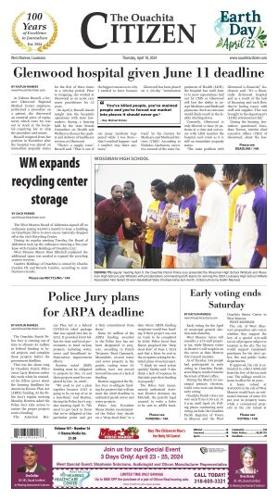
- Glenwood hospital given June 11 deadline
- Student funds misappropriated, MCSB audit says
- Ferriday gym to be named for Cade
- Tiffee charged with terrorizing




Commented
Sorry, there are no recent results for popular commented articles.